Thursday, June 8, 2017

The Granite Industry, Part 6 B of 6 - Labor Skills


Ox-drawn garrymander cart and paving block cutters
Bay State Quarry, Lanesville c. 1870s
Sandy Bay Historical Society
The granite industry evolved during the nineteenth century from local artisan enterprise to sophisticated corporations meeting widespread, large-scale, high-value contracts. Machinery increasingly supplemented but did not replace hand labor. The businessmen and the workers gained greater capability in quarrying, refining, and transporting stone. All through its history into the 1930s the paving block sector tended to steady the business cycles for those cutters skilled enough to make a living at exacting strenuous work. They were usually paid piecemeal rather than wages, sometimes within company quarries, sometimes in small operations off hours, off season, or as independents.

Babson Farm Quarry, Halibut Point 1909
Cleaves Collection, Sandy Bay Historical Society
Deep pit quarrying, large blocks, and big shipments required specialized labor and organization. From the front office to various machine operators and crew members both employers and employees had to function alertly in a highly competitive environment. The well-dressed man in this photograph is probably inspecting dimension stone for compliance with contract standards-perhaps the Sandy Bay Breakwater.

Cutting and polishing shed of the Rockport Granite Company, Bay View
Herman W. Spooner photo, courtesy of Robert Ambrogi, Vintage Rockport
Architectural specifications had to be met precisely by draftsmen, quarrymen, and finishers using centralized facilities with compressed air tools and a railroad derrick. The blocks might be fitted, then individually labeled and boxed for assembly at a distant construction site.

Carving fluted columns, Bay View
Postcard scene courtesy of the Cape Ann Museum
Preparing and delivering fluted columns must have ranked among the most demanding challenges for managing bulk with delicacy. Despite its tremendous compressive strength granite can easily be damaged in tension, or chipped in mishandling. Only the most experienced craftsmen would have worked on these projects.

Loading a roughed-out column at Bay View wharf
aboard Rockport Granite Company Lighter # 1
Erkkila Collection, Cape Ann Museum
Supplying stone to a job site only at a rough-finish stage was a safer approach for the granite company, but it missed the potential rewards and status of refined work.

The pair of monolithic fountains hewn from Sea Green granite for the Union Railroad Station Plaza in Washington DC must be considered the crowning opportunity for Cape Ann craftsmen.

Stonecutters standing in a bowl for the Union Station Plaza
Rockport Granite Company works, Bay View 1909.
Note the fabrication turntable, the scale model on the floor to its right, the power plant chimney at right edge of picture, and the Methodist Church steeple in the distance.
Photograph courtesy of Robert Ambrogi, Vintage Rockport
They began with two gargantuan 65-ton blocks brought down by rail from Blood Ledge Quarry to the Bay View yard. The finishing crews roughed in each bowl with imponderable hours of chiseling, then used the 4-point surfacing machine followed by hand work with six-cut bushing hammers to delicately approach the final shape. Barbara Erkkila in Hammers on Stone (1980) savored the achievement with pride. "The men brought the granite surface to a dull hone finish by using iron shot, then putty powder and felt buffers, pouring on the water carefully from old condensed milk cans. But the trick they used with the fountain was that they had the big stone revolve below the buffer for polishing instead of having the buffer dance its way over the stationary stone as was the usual process for polishing. For the first time, electrical power was used to do this."

One of two fountain bowls in place at Union Station Plaza, Washington D. C.
This view appears on a commemorative postcard by the Rockport Granite Company
Courtesy of Robert Ambrogi, Vintage Rockport
The master works arrived at Union Station aboard flatcars chaperoned by Babson Farm Quarry engineer Bucky Moore who rode all the way within one of the bowls. They ornament the Plaza near the United States Capitol to the present day.

One wonders about the temperament of men capable of sustained grueling labor with exacting skill.

Thursday, June 1, 2017

The Granite Industry, Part 6A of 6 - Labor Portraits

In economics labor refers to all the physical and mental effort that produces goods and services. In industrial-age politics it suggests a class of 'workers' distinct from managers and owners. The political usage bears many more emotional drapery than the economic one because it is entwined with the wants of men rather than their abilities.

Loading Granite at Knowlton's Wharf, Rockport
detail of oil painting by Alfred J. Wiggin 1852 1
Labor accomplishes tasks. In the granite business many of those tasks are skilled, hazardous, and arduous to the point of inspiring a mystique on the part of outsiders. Some of the mystique has been cultivated by the stone workers themselves.

From its earliest days commercial quarrying depended on immigrant labor. A local newspaper in 1866 related that forty years previously, first-generation granite entrepreneur William Torrey "would hire stout rugged men from Maine, New Hampshire and Vermont. Of a large number of applicants for labor, he would make his selection with as much pride as a stock fancier would select his pacer or draft horse." 2 The story carries a sense of adventure on all sides. It is echoed in the recollections of Dr. Lemuel Gott as gathered in the History of Rockport, 1888.
The most of them were young men, lively and full of fun; for the greater number of them, this was the first of their leaving home. They usually commenced coming about the first of March and by the first of April the gangs were full. It was no ten-hour system or weekly payments in those days; but an early breakfast and go to work; one hour for dinner, and then a late supper. Nearly all of the men worked by the month at a certain rate and board, receiving their pay at the end of the season except as they would occasionally call for a small amount of spending money. They were generally frugal and reliable.

Working the Bay State Quarry in Lanesville, 1870s 1
One young Vermonter named John Stimson came in those early days with the advantage of being a son-in-law of the founder of the Gloucester and Boston Granite Company and a stockholder in the firm. Within a few years he set himself up as an independent quarryman, then partnered with Ezra Eames in an enterprise that eventually incorporated in 1864 as the Rockport Granite Company with Stimson as treasurer. He continued on as quarry manager. 3

John Stimson poured powder into a seam and fired it off. Not a satisfactory blast so he proceeded to fill the seam again from a partly filled powder keg in his hand. Contents were exploded in a premature blast. He scorched his face. (1872) 4

John Stimson... was inspecting hoist at quarry when the chain parted and struck him. He fell face forward on ledge surface. No apparent wounds, no bones broken, but concussion. Advanced age. Tuesday and Wednesday still in stupor. (1878) 4

Stimson's physical day in the quarry blurred distinctions between owner, manager and laborer; but his entrepreneurial net worth did not.

In the middle part of the nineteenth century impoverished foreigners began arriving, or being imported, to displace the early generations of quarry workers who had themselves migrated to Cape Ann from northern New England states.

When the employment of Irishmen was proposed it met with vigorous opposition. The house which was being prepared for them to occupy was two or three times blown up with powder; and other means were employed to keep out the unwelcome immigrants. This prejudice, however, has long since died out, and all nationalities are allowed to work unmolested. 4

It was a pattern repeated in later decades when cheap labor came from Italy and Scandinavia.

Finnish paving cutters, Woodbury Hill, Lanesville, early 20th century
Barbara Erkkila collection, Cape Ann Museum
Notes
1. From collections of the Sandy Bay Historical Society
2. Cape Ann Advertiser, May 18, 1866.
3. Cape Ann Advertiser, September 9, 1872 and November 1, 1878. From the Erkkila files, Cape Ann Museum.
4. Lemuel Gott, History of Rockport, 1888.

Thursday, May 25, 2017

Painterly Plants of Spring

Incandescent Morning
Oak and cat brier


Divergent Success
Crabapple and lichen


Perfect Gestures
Royal ferns


Lush Ground
Canada mayflower and moss


To Be a Bee
Arrowhead violet


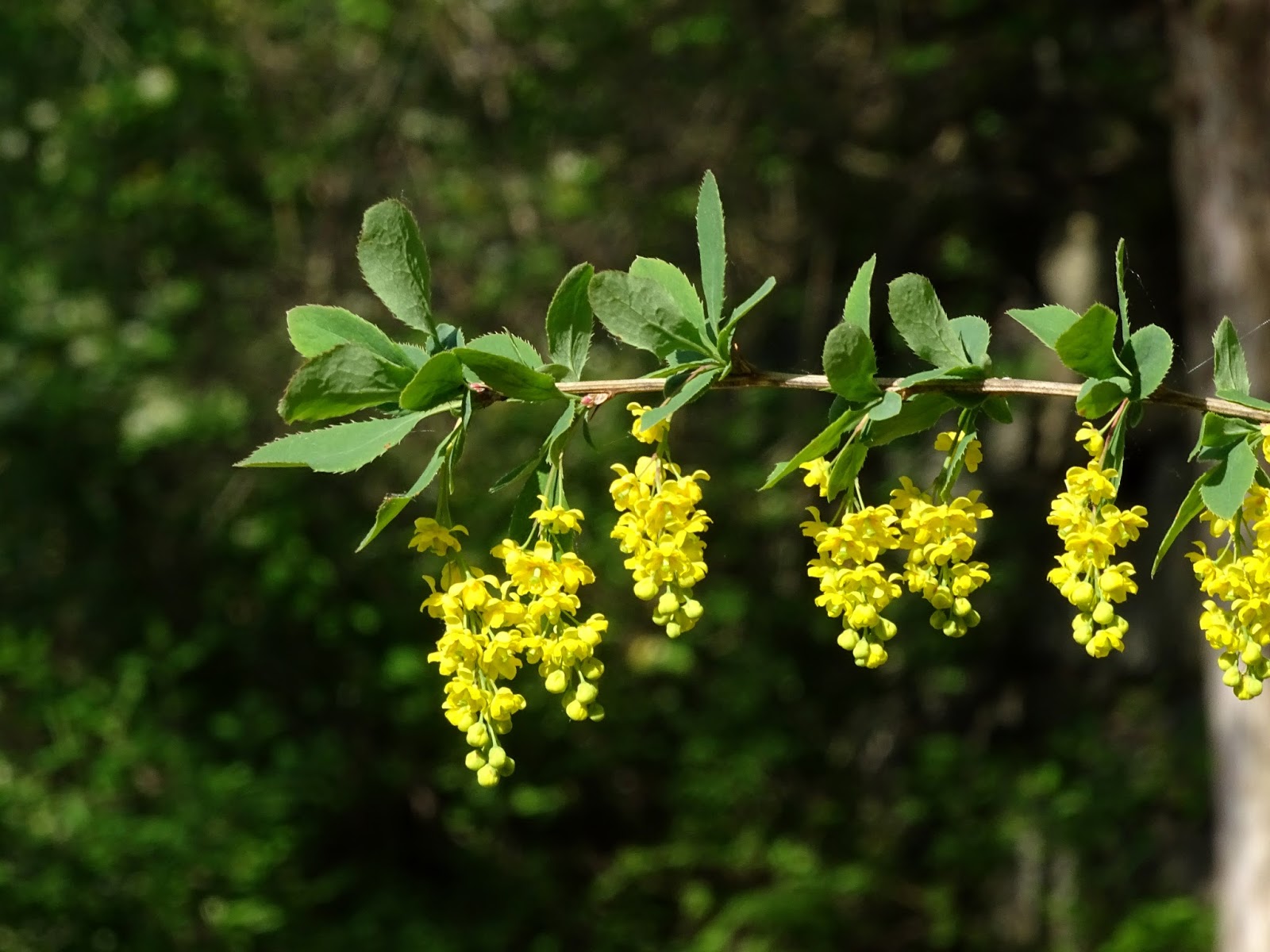
Invitation to Pollination
European barberry


Merger
Shad, juniper, oak


Preciously Wrapped
Shagbark hickory bud


Small Request
Bluets on a quarry wall


Lemon Lime Meadow
Yellow rocket and buttercups


Scarlet Burst
Red maple

Thursday, May 18, 2017

Bird-a-thon Lite

The Massachusetts  Audubon Society schedules its annual Bird-a-thon for the peak of spring migration when the possibility of fair weather, colorful plumage, and the absence of annoying tree leaves give us the best chance at varied sightings in a twenty-four hour sprint.

Northern flicker
 In the weeks leading up to the Bird-a-thon I worked on extending my stalking ability into the treetops. The uncertain balance point lies where the limits of the zoom lens meet the limits of wariness.

Turkey vulture passing the Halibut Point State Park Visitors' Center
 Birds with their superior vision maintain the upper hand in this contest. From the heights they keep an eye on the binoculars and cameras below.

Green heron
 Down at the quarry rim we photographers enjoy wide-open sight lines but so do the birds. They generally head for the exits at the sight of even innocuous intruders like me.

Double-crested cormorant
Their disappearance into the air pits admiration against frustration. The camera man can no more command a portrait than he can fly.

Spotted sandpiper
Sometimes the portrait itself doesn't fly, in the instant of composing, focusing, exposing, and not breathing or being visible. But perhaps you will manage enough for an indisputable sighting record, with GPS and dating authority, to contribute at the Bird-a-thon tabulation.

Swamp sparrow
There are fine points of identification to sharpen up.

Field sparrow
I studied distinctions among some of the 'Little Brown Jobs' - LBJs.

Kingbirds
Often enough the pleasures of art and nature sweetened the pursuit of science and math on a ramble through the Park.

Chris Leahy at dawn
I joined Chris Leahy and friends at 6:00 this past Saturday morning for the Halibut Point portion of the Bird-a-thon.

Peering into the dim, pewtery skies the experts called out gannets, ring-billed gulls, and red-throated loons. From somewhere in the treetops they distinguished vocalizations of warblers: northern parula, black-throated blue, Wilson's. Their unfulfilled prize would have been to hear the drumbeat coos of a black-billed cuckoo, bringing their cumulative multi-year Cape Ann Bird-a-thon total to 199 species. But the cuckoo probably wouldn't show up for a week or two.

Red-breasted nuthatch
I added to my Halibut Point portfolio a sharp photograph of a tiny hyperactive nuthatch holding pose for a moment between branches of a spruce tree. Its spritely success within nature's pitfalls, its pert beauty, surely reprised the delight at the heart of each member of the Bird-a-thon band.

*  *  *

The Bird-a-thon Team entering Halibut Point State Park,
warming up to jokes for roasting Chris
at his retirement party from Mass Audubon this week.
Neil Emond photo
Ps - overdue warm weather brought the black-billed cuckoo to Halibut Point on Wednesday.

Friday, May 12, 2017

Freshness


Shad blossoms


Hermit thrush


Mullein


Gray birch catkins


American lady butterfly on dandelion


Staghorn sumac


Highbush blueberry


Chickadee in apple blossoms


Cattails rising

Thursday, May 4, 2017

The Granite Industry, Part 5 of 6 - Government

We the People of the United States, in Order to form a more perfect Union,...provide for the common defense, promote the general Welfare, and secure the Blessings of Liberty....  Preamble to the Constitution, 1787
 
The fledgling American government aimed to foster an environment where individuals and businesses could thrive fairly. It had to define citizenship and immigration policies, mediating among intensely different points of view toward an 'Open Door.' During the nineteenth century the original thirteen States increased to forty-five. Territorial, economic, and population  expansion took on mythic values interrupted by cycles of crash and conflict that elicited a growing response in government regulation. The evolution of Cape Ann granite commerce from an artisan to industrial enterprise coincided with all these trends.

The Constitutional mandate to "provide for the common defense" was exacerbated by our own expansionism and by the shifting ambitions of European powers. In 1812 the United States was at war again with England. Government expenditures for coastal defense gave early impetus to the granite industry. 

Fort Warren, Boston Harbor 1

Many of the first quarry developments here between 1824 and 1842 resulted from shoreline resource explorations to supply stone for the fortification of Boston Harbor islandsarbor islandsi engineered by Colonel Sylvanus Thayer, and the development of naval yards at Charlestown and Portsmouth. 2

Norfolk (VA) Naval Yard dry dock under construction, 1918.
Stone supplied by the Rockport Granite Company. 3
Government appropriations continued to fund large opportunities for the granite industry throughout its history. Cape Ann artisans learned to satisfy ornate as well as structural standards. Local granite companies crafted dimension stone and facades for many handsome edifices around the country, such as these pictured below. 4 
Boston Custom House
Essex County Courthouse, Salem
The Longfellow Bridge connecting Boston and Cambridge

Stock purchase agreement by incorporators of the Rockport Granite Company
Authorized by Internal Revenue stamp October 4, 1864 5
The new American political economy met the Industrial Revolution by experimenting with methods of business formation. In Europe, up to the middle of the nineteenth century, the typical corporation was a privileged monopoly created by rulers in return for favors promised by the company, and few such entities existed. Early America was not so different. It appears that only seven business corporations were created in the Thirteen Colonies, and another twenty eight up to 1790. By 1860 state legislatures had chartered more than 30,000 corporations. 6

Chartering corporations by special acts of state legislatures became a system susceptible to corruption. Incumbent or aspiring corporations would bribe or otherwise influence legislators. The solution to these problems after they became increasingly evident was the general incorporation statute, which makes the granting of corporate charters a routine function of the executive branch. This was the environment in which the Rockport Granite Company sought legislative sanctification in 1864, followed by the Cape Ann Granite Company in 1867.

Governing functions expanded inexorably with the growth of America. Public support, or demand, envisioned an increasing role to "promote the general Welfare and secure the Blessings of Liberty."  The government sector gradually assumed a vital presence in education, transportation, utilities, commerce, health, safety. Public works benefitted consumers and producers. 

The proposed Sandy Bay Harbor of Refuge, 1894 7

Maritime support, a traditional service of government, resulted in significant boons to the Cape Ann granite suppliers. Sandy Bay Harbor received its defining enclosure by the federally funded Long Cove Breakwater project of 1836-1840. The maritime sanctuary concept was extended remarkably by a petition for the Sandy Bay Harbor of Refuge. Construction of a granite wall nearly two miles long emerging from sixty-foot depths of the Atlantic Ocean was sponsored by Congressional appropriations from 1885 to 1915, bringing headline notice from the New York Times "To Have Second Largest Harbor: Rockport, Mass., Will Rank Next to Cherbourg, France, When Breakwater is Completed." 8 Local newspapers carried accounts of bountiful speeches and banquets as each segment was completed and new rounds of expenditure proposed.


Placing capstones on the Sandy Bay Breakwater, c. 1915 3

To supply the prodigious amount of stone required for one substantial phase of the Sandy Bay (Rockport), Dog Bar (Gloucester), and Newburyport breakwaters in 1896 the three major Cape Ann granite companies "hitherto in deadly competition" successfully combined their bid. 9 One of the boons of this type of construction was a compensated dumping ground for the jagged quarry waste stone which could lock together desirably in a breakwater foundation. Supplying huge dimensional stones for the superstructure gave rise to new quarry developments on Folly Point and Halibut Point.

The budgetary strains of World War One halted the breakwater boon. It never revived as engine-powered vessels coming to the fore after the Age of Sail had less need for a Harbor of Refuge. Increasing governmental consideration for the welfare of labor in the twentieth century counted as another factor in the untenable circumstances of the granite industry here.

Notes
1. 1906 photo from the Detroit Publishing Co. collection, The Library of Congress.
2. Lemuel Gott, History of Rockport, 1888.
3. Sandy Bay Historical Society photos.
4. Arthur Wellington Brayley, History of the Granite Industry of New England, Volume 2, 1913.
5. Rockport Granite Company Collection, Baker Library, Harvard Business School.
6. Richard Sylla, "How the American Corporation Evolved Over Two Centuries," Proceedings of the American Philosophical Society, Vol. 158 No. 4, December 2014.

7. Sketch from "The Building of a Breakwater" by Herman Babson, New England Magazine, October 1894.
8. New York Times, September 27, 1914. Erkkila notes, Cape Ann Museum.
9. The Boston Globe, September 28, 1896. Erkkila notes, Cape Ann Museum.